Scrapbook page 43
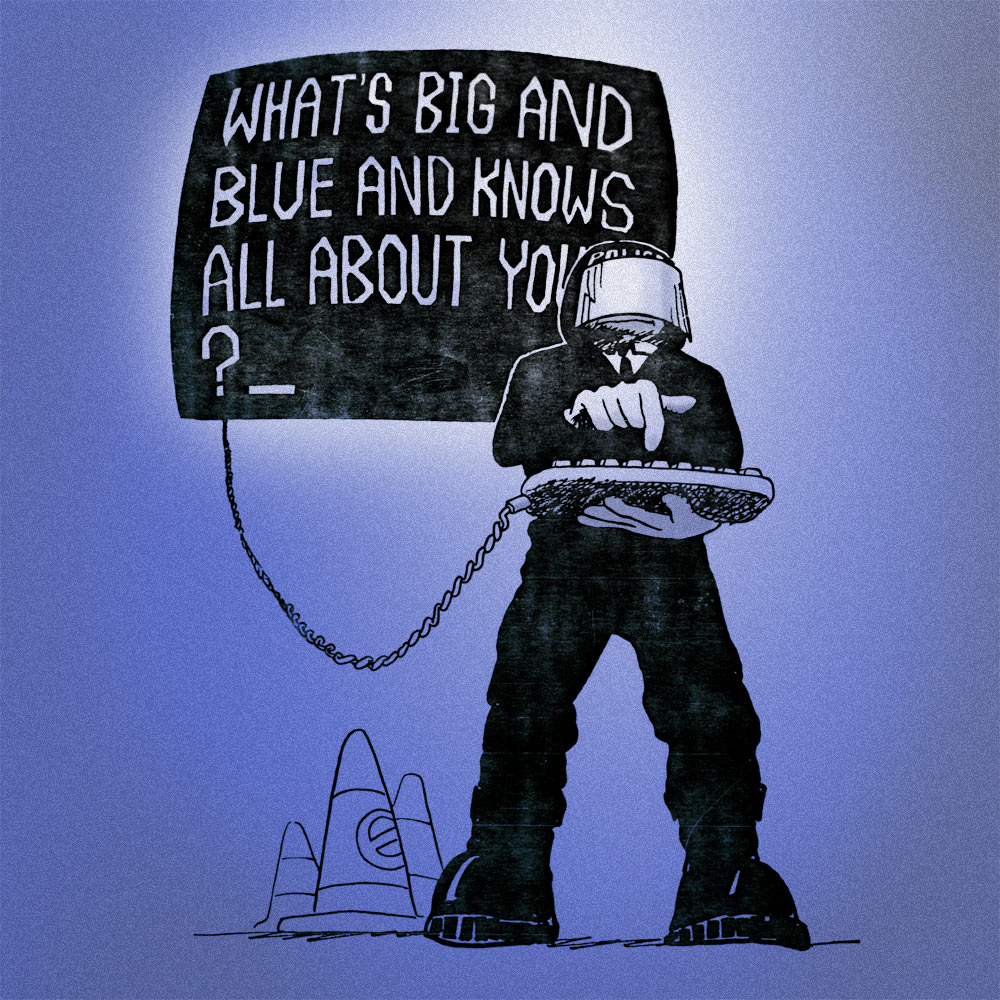
Poster (and actually the title slide on the overhead projector acetate, from which this is scanned) for a talk I gave for the Computer Science department of Royal Holloway in 1991 or shortly afterwards mostly about the ethical and procedural implications of databases such as the UK’s Police National Computer and other police systems. I had worked on the Home Office Large Major Enquiry System, known as H.O.L.M.E.S. (yes, really: the Home Office’s clumsiest acronym), which ran in police incident rooms, for a couple of years.
Earlier, in 1989, I had given another seminar on some of the implications of automation when “computerising” a manual, paper-based system, using H.O.L.M.E.S. as an exemplar. This was based on my observations from having had to support such a system after it had been implemented: H.O.L.M.E.S was, by design, nowhere near as useful as it could have been. For a tool whose successful application arguably has very clear benefits — for example, leading to the arrest of perpetrators of serial crimes sooner in the series rather than later — that’s a deficiency that may have palpable consequences. That talk was entitled Grisly Murders and the Computer Scientist.
Black and white on acetate, but coloured digitally here.